Offshore wind security now depends on execution readiness
Projects that cannot prove supplier resilience, asset protection and delivery discipline will struggle to defend their value case in offshore wind.
That is the practical implication of recent industry signals. WindEurope has sharpened its language around homegrown power at scale and the physical security of energy infrastructure. At the same time, execution stories have not gone away. Foundation methods are still being tested in live projects, as shown by IQIP, EnBW and Vattenfall’s EQ-Piling test. Germany is still an active turbine market, with GE Vernova winning new orders. Floating wind still needs a clearer route to scale and confidence, a point underlined in Windpower Monthly’s latest piece on fixed-bottom’s stepping-stone model for floating growth.
Taken together, offshore wind still has strategic momentum. Security and sovereignty however are moving from political framing into commercial screening criteria for project developers.
Security now sits inside the investment case
For years, the standard offshore wind pitch focused on resource quality, auction frameworks and installed capacity. Those still matter, but they are no longer enough on their own. Buyers, investors and public stakeholders increasingly want to know three things before they trust the growth story.
First, can the project be supplied through a chain that is visible enough to withstand disruption? Second, can the underlying infrastructure be protected and operated under real-world pressure? Third, can the delivery plan survive the bottlenecks that sit around ports, vessels, components, grid timing and specialised construction methods?
These questions shape financing confidence, procurement strategy and the political credibility of offshore wind build-out. A project that looks strong on headline capacity but weak on supplier resilience or asset protection can still struggle. If governments want offshore wind to support energy independence, then project teams need to show how the supply chain, operating model and technology choices reinforce that goal instead of weakening it.
The delivery evidence has to get sharper
Pelergy’s project work points in the same direction. In a project we delivered, Pelergy analysed floating wind concrete volumes and scour protection demand. The output supported a board-level business case, which then helped drive an equity investment in a major OEM and a targeted funding bid. Through this work, we witnessed a strong example of what good security and sovereignty framing needs in practice: quantified market logic tied directly to a funding decision.
The same principle applies further down the chain. In another project for RWE, Pelergy built a fully populated offshore wind supply-chain database so a developer could assess and engage suppliers using data-driven metrics. That sort of visibility becomes more valuable when local supply chain content requirements tighten and when developers need to explain where resilience actually comes from. A live supplier picture, with enough granularity to support package decisions, is much really useful to help build resilience.
In another project, Pelergy filtered a global market down to 20 technologies for targeted one-to-one engagement in offshore wind servicing. Again, the point was not broad horizon scanning for its own sake. It was to create a practical shortlist that could support strategic investment conversations. The market is heading towards more of this kind of evidence discipline. Teams will need narrower shortlists, better traceability, and clearer links between technology selection and delivery risk.
What changes for developers and utilities
Supply-chain mapping needs to happen earlier and at a more decision-useful level. This does not mean producing a large, static vendor list. It means building a view of which suppliers, fabrication routes and logistics pathways are material to the project and where the real concentration risks sit.
Security planning also needs to move closer to core project development. WindEurope’s recent emphasis on protecting offshore assets is a reminder that physical security can no longer be treated as a downstream operating detail. Ports, substations, export routes and offshore assets all sit inside a wider resilience picture. If those considerations appear late, the cost of adapting the project rises quickly.
Technology choices deserve the same discipline. New methods can improve execution, but only if they are judged against delivery conditions rather than novelty. The EQ-Piling test is a good example of why the market keeps paying attention to foundation methods. Developers are still looking for routes to reduce installation friction, but new methods only become commercially meaningful once they can be placed inside vessel constraints, seabed conditions, certification pathways and schedule logic.
What changes for investors
Investors face a parallel shift. The question is now whether a specific project or technology proposition is robust enough to deliver under tighter system constraints. Execution readiness now sits closer to the centre of diligence. Our supply chain database work for RWE is instructive here because the investment case improved when the market and materials logic became clearer. The transaction did not depend on broad enthusiasm for floating wind. It depended on a sharper understanding of where demand, volumes and route-to-market credibility sat.
This is the same mindset that now needs to be applied across security and sovereignty themes. If an asset is presented as strategically important, investors will want proof that the supply base is credible, that dependencies are visible, and that project resilience has been considered from the start.
The financing conversation is also likely to absorb more operational detail. Supply-chain resilience, technology bankability and physical protection have a habit of turning into board-level concerns once delays, cost creep or disruption start to affect value. Investors who ask those questions early will have a better chance of distinguishing between strong strategic stories and strong execution cases.
Why sovereignty claims will be tested more aggressively
Europe’s push for homegrown energy gives offshore wind a powerful narrative tailwind. But that same narrative creates a higher bar for proof. If a project claims strategic value, policymakers and counterparties will expect more than capacity numbers. They will expect evidence on domestic capability, supplier depth, logistics readiness and system resilience. In other words, sovereignty language pulls more delivery scrutiny into the room.
That has two consequences. The first is that localisation strategies need to be commercially coherent. They need to improve resilience, capability and decision quality, rather than simply repackage procurement constraints in softer language. The second is that teams will need better ways to connect project development choices to wider industrial outcomes. Pelergy’s experience with supply-chain datasets, technology scouting and market analysis suggests that this work is most valuable when it supports an immediate decision. Where should a developer focus supplier engagement? Which technology routes deserve deeper diligence? Which package assumptions are exposed? Which resilience claims can actually be defended with evidence?
Those are the questions that turn strategy into execution.
What Pelergy sees next
The next phase of offshore wind will reward teams that can move cleanly between strategic framing and delivery detail.
That means more projects will need:
- security-led supplier and infrastructure screening early in the programme - stronger supply-chain datasets tied to real package decisions - technology scouting that filters for operational robustness, bankability and deployment realism - board-ready evidence that links delivery constraints to commercial decisions - clearer geospatial and logistics intelligence around ports, routes and deployment pathways
This is also why the distinction between fixed-bottom and floating matters less than it used to in some boardroom conversations. Both segments now need a tighter link between ambition and execution. Floating wind still carries its own bankability challenges, but fixed-bottom projects are also under pressure to prove that scale can still be delivered under tighter supply and infrastructure constraints.
The firms that stand out over the next two years will be the ones that can support that language with a stronger evidence chain.
If you are building that evidence chain now, Pelergy’s earlier work on offshore wind technology scouting shows the same principle in another form: better investment and delivery decisions start with narrower, more usable intelligence.
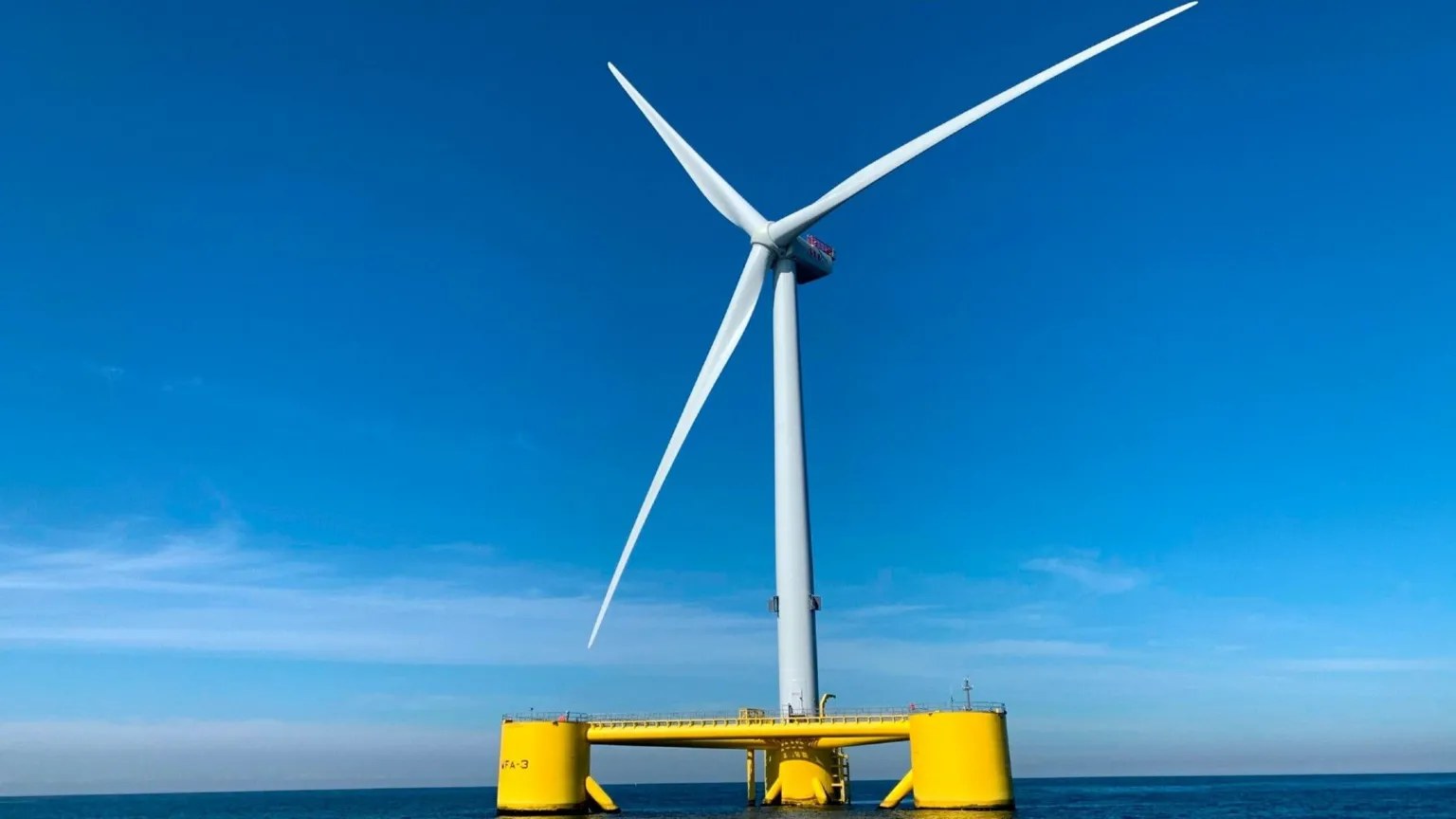
Image credit: WindFloat Atlantic. Source: WindFloat Atlantic.