What Chinese OEM share means for European offshore execution
Chinese turbine OEMs are taking a larger share of global wind orders and for European offshore teams, it changes supplier qualification, localisation assumptions, vessel planning, and the evidence standard for who can actually deliver at scale.
Wood Mackenzie’s latest order-intake analysis says Chinese OEMs extended their international reach in 2025. The practical consequence is more procurement decisions now sit inside a tighter, more competitive, and more politically sensitive supply chain. Source: Wood Mackenzie.
That matters because offshore wind delivery is already constrained by the basics. Teams do not win on ambition alone. They win on delivery windows, verified capability, and a supplier map that still looks credible after real-world friction is applied.
Pelergy’s view is that the share shift will show up in three places first: procurement speed, localisation logic, and execution risk.
Procurement speed now matters more than supplier headcount
A bigger global OEM footprint does not automatically make procurement easier. In practice, it can do the opposite.
European developers already manage long lead times, changing certification expectations, and a shrinking pool of package combinations that fit the project schedule. If more OEM capacity is pulled into a wider international order book, the first effect is often not lower prices. It is more competition for the same delivery windows.
That is why the old habit of building a broad supplier list and assuming options will be there later is becoming risky. The better question is whether a supplier can move through qualification, contracting, and mobilisation on the timetable the project actually needs.
In a project Pelergy delivered for a major developer, we developed a supply-chain database that helped evaluate and engage suppliers using live metrics rather than static assumptions. The value was the discipline of sorting the capable from the merely interested.
That same logic becomes more important when OEM order books tighten. The projects that stay on schedule will be the ones that have already separated marketing claims from delivery evidence.
Localisation assumptions need a harder test
The second impact is localisation. European offshore wind has spent years talking about local content, industrial policy, and regional capability. Those discussions matter, but a changing OEM landscape makes them harder to hand-wave.
If Chinese OEMs keep increasing their global share, developers and policymakers will have to answer a more awkward question: which parts of the value chain really need to be local, and which parts are simply assumed to be local because that sounded politically neat?
A project may be technically bankable with a global supply mix, but still fail commercially if local fabrication, logistics, or maintenance expectations do not line up with actual package availability. Equally, a project can overpay for local content that does not improve schedule certainty.
In a project for the Offshore Wind Industry Council (OWIC), Pelergy delivered an industry-wide capability analysis that informed supply-chain intervention and policy thinking for UK offshore wind. The work showed how quickly capability discussions become policy discussions once the market gets tight. The same thing is happening again, only now the pressure is coming from international OEM competition as well as domestic delivery constraints.
The forward-looking implication is clear. The next round of European offshore winners will not be the teams that say localisation is important. It will be the teams that know which packages need local resilience, which can be globally sourced, and where the trade-off sits between cost and delivery certainty.
Execution risk is moving upstream into diligence
The third effect is more subtle. Chinese OEM share growth is pushing execution risk further upstream, into the point where projects are screened and financed.
That is because supply chain and bankability are now joined at the hip. A developer cannot treat OEM choice as a downstream procurement decision if the selected equipment or package affects financing, certification, installation sequencing, or future service access.
If the procurement team is only asked to validate price, and not proof of delivery under offshore conditions, the project is already behind. If the finance team is only shown a neat cost curve, and not the assumptions behind package availability and maintenance support, the diligence pack is incomplete.
In a project for EnBW, Pelergy helped shape a compliance-led supply chain statement that made the evidence requirements much clearer. That kind of discipline matters here as well. When the market is noisier, the best teams tighten the evidence chain.
For developers, that means the supplier shortlist needs to answer four questions early:
• Can they deliver at the required scale?
• Can they pass qualification fast enough?
• Do they fit the project’s logistics and installation sequence?
• What happens if the international order book shifts again?
If those questions are answered late, the project may still be alive, but it will be expensive, slow, and harder to defend.
What this means for European offshore teams right now
The practical response is not to overreact to one order-intake dataset. It is to use the signal to tighten assumptions before the market does it for you.
European offshore teams should be stress-testing three things now.
First, supplier concentration. If a small number of OEMs dominate the package type you need, the project carries more schedule risk than the base case suggests.
Second, localisation logic. If local content is being used as a policy comfort blanket rather than a delivery necessity, the project team should say so plainly.
Third, fallback options. If a preferred supplier slips, what is the second path, and what evidence would make it bankable in time?
That is the sort of question Pelergy helps teams answer. Not by guessing the market’s mood, but by building a view of who can deliver, where the gaps are, and what the next constraint is likely to be.
What changes next
Over the next few years, the most useful competitive advantage in offshore wind may be less about owning more supplier relationships and more about knowing which ones matter under pressure.
A team that understands OEM share, regional capability, and delivery sequencing will make better decisions on pricing, contracting, and project timing. A team that treats all suppliers as interchangeable will discover the gap too late.
That shift also points to the next wave of market behaviour. Expect more scrutiny on evidence tiering, more pressure on supply-chain transparency, and more interest in digital tools that can show who is bankable before the headline market data changes again.
Pelergy’s angle is simple. The market share story is only useful if it changes the way teams execute. The next winners will be the developers, investors, and industrial partners who use the signal to tighten procurement logic before the schedule tightens it for them.
Explore the Wind Technology Database.
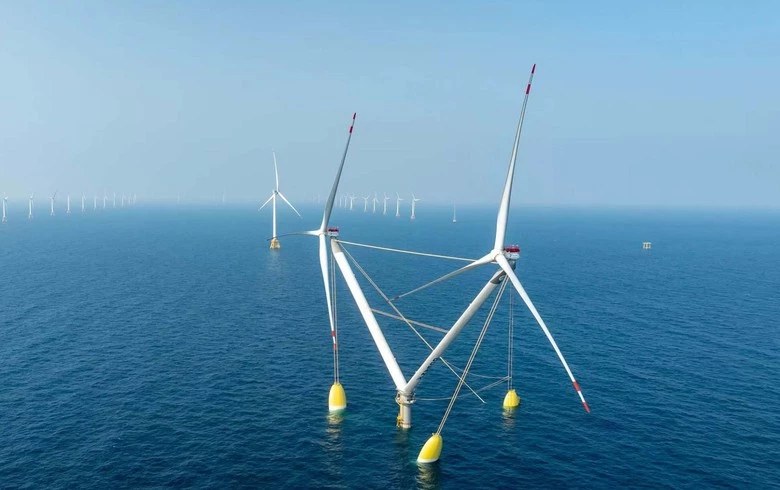
Image credit: Ming Yang.