Floating wind LCOE models miss three delivery levers that decide bankability
Floating wind economics are often presented as a clean curve: bigger turbines, better capacity factors, and scale manufacturing drive LCOE down. That curve exists, but it is not the whole story. The projects that reach investment committee approval are usually decided by delivery levers that sit outside many headline models.
1) Assurance throughput, not just technical performance
Most models assume technical learning curves and lower OPEX over time. The commercial bottleneck is usually assurance throughput: how fast technical performance is converted into certifiable evidence that investors and insurers accept.
In floating wind risk-modelling work, we repeatedly see strong engineering assumptions paired with weak evidence-flow visibility. That gap has direct consequences for insurance pricing and cost of capital.
2) Supply chain readiness is time-dependent and directly priced
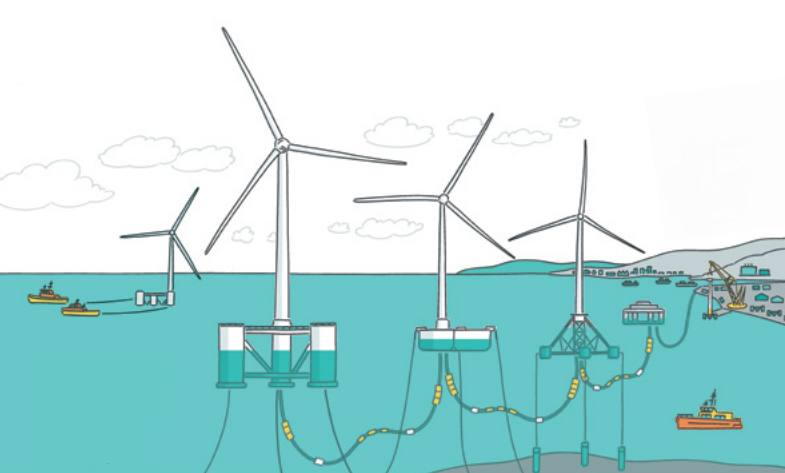
Substructures, mooring systems, dynamic cables, ports, and heavy-lift windows are not static inputs. If availability shifts, revenue timing shifts, and financing sensitivity shifts with it.
This is why supply chain readiness needs to be modelled as a dynamic time series, not a single fixed assumption.
3) Investors price dynamic risk reduction, not static risk factors
Two projects can show similar LCOE projections and still receive very different financing terms. The differentiator is the quality and timing of evidence that reduces risk through each milestone.
If a model cannot show auditable risk reduction across decision gates, it is discounted regardless of theoretical cost trajectory.
Practical checks for investment-grade modelling
To make a floating wind model decision-ready, include:
• Evidence throughput assumptions linked to assurance gates
• Time-based supply chain constraints tied to delivery windows
• A milestone-by-milestone risk trajectory, not one static risk line
How Pelergy supports this work
Pelergy supports investors, developers, and innovators with risk and delivery analysis grounded in real programme and market-entry evidence. We focus on the assumptions that actually decide bankability.
If you want a practical review of your floating wind assumptions, contact Pelergy for a focused model stress-test.
Image credit: RenewableUK, “Floating Wind: Anchoring the Next Generation Offshore”. Source: RenewableUK.